When players use Hitclub, they’re interacting with 1 portal in a specific market. When analysts look at the same portal, they see something embedded in a much larger ecosystem — a Southeast Asian online gaming market that has grown substantially over the past decade, that operates with distinct regional preferences not found in Western markets, and that is shaped by mobile adoption patterns, cultural attitudes toward card games, and regulatory environments that vary significantly from country to country.
Understanding Hitclub in this broader context doesn’t change what players experience daily. But it does explain why the portal has developed the way it has, why its particular combination of card games, live dealer tables, and jackpot slots resonates in its core market, and where it sits relative to the larger forces shaping online gaming in the region.
Portals like GO88 have developed within the same regional market, shaped by the same forces. Examining how Hitclub fits within the broader landscape alongside portals like GO88 gives a more complete picture of the category than looking at any single portal in isolation.
What Hitclub Offers Within This Landscape
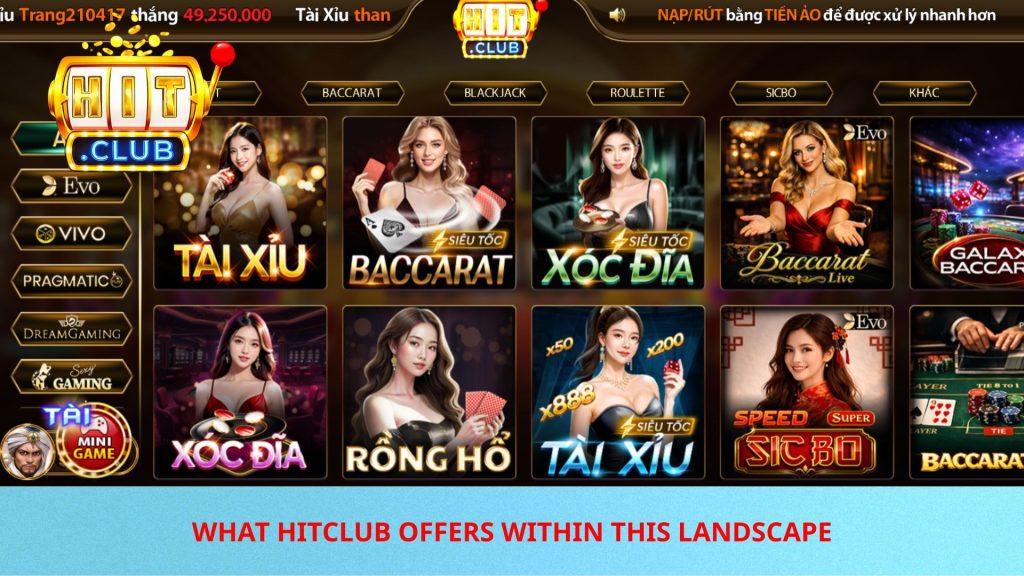
Hitclub operates as a reward gaming portal with 4 game categories: card games (Tiến Lên, Phỏm, Mậu Binh, Poker), jackpot slots with progressive prize mechanics, live dealer tables with real-time streamed sessions, and arcade-style mini games. This product structure is specifically calibrated for the Vietnamese market — a reflection of local game preferences, mobile access patterns, and player expectations that have developed distinctly from online gaming markets in Europe or North America.
The Regional Context That Shaped Hitclub’s Product
Vietnamese Card Games as Cultural Infrastructure
Card games occupy a position in Vietnamese entertainment culture that has no direct equivalent in most Western gaming markets. Titles like Tiến Lên, Phỏm, and Mậu Binh are genuinely woven into social tradition — played at family gatherings, at communal spaces, and now online through gaming portals that have brought the social card game experience into digital form.
This cultural foundation means that any reward gaming portal operating in the Vietnamese market that doesn’t execute card games well is missing the load-bearing element of its product. The card game section isn’t 1 category among equals — it’s the category that establishes whether a portal belongs in the market. Hitclub’s investment in card game infrastructure reflects an accurate reading of this cultural reality.
Within the broader Southeast Asian online gaming landscape, the Vietnamese card game preference is a specific regional characteristic. Portals built primarily for other regional markets sometimes underinvest in card game sections when entering Vietnam, and the player community notices quickly. Hitclub’s card section is built for Vietnamese card culture specifically — which is a differentiation factor within the regional landscape even beyond Vietnam’s borders, as Vietnamese player communities exist across Southeast Asia.
Mobile-First Access as a Regional Pattern
Southeast Asia’s online gaming market is defined by mobile access in a way that differentiates it sharply from gaming markets in North America or Western Europe, where desktop and console gaming remain more significant. In Vietnam specifically, smartphone adoption has been the primary driver of online gaming expansion — the gaming portal is a mobile product by necessity, not by preference.
This regional reality has shaped Hitclub’s technical architecture more than any other single factor. The decision to optimize specifically for mid-range Android devices — the hardware category that represents the majority of Vietnamese smartphone users — is a direct response to how the regional market actually accesses online gaming products. A portal built for the regional mobile reality performs better in this market than one porting a desktop experience to mobile.
The broader regional pattern extends beyond Vietnam: across Southeast Asia, gaming portal access is mobile-dominant, and the portals that have invested most seriously in mobile performance have developed the strongest user bases in the region. Hitclub’s mobile architecture places it within this regional success pattern rather than against it.
Live Dealer Gaming and the Authenticity Demand in Southeast Asia
Live dealer gaming has found particularly strong adoption in Southeast Asian markets compared to some Western equivalents. The preference for human-hosted table experiences — as opposed to purely algorithmic outcomes — reflects regional attitudes toward gaming that emphasize social interaction, observable fairness, and the presence of a genuine human element in the result.
In this regional context, Hitclub’s live dealer section isn’t simply an added feature — it’s a response to a specific regional demand. Players in the Vietnamese market who want to experience table gaming in a format that feels genuinely live seek portals that execute this category reliably. The live dealer section at Hitclub has been built with the streaming infrastructure necessary to deliver this experience consistently, which positions the portal correctly within the regional preference landscape.
(Live dealer and full game catalog information: https://hitclub.cab/)
Where Hitclub Sits Relative to the Broader Market
Within the Vietnamese Market
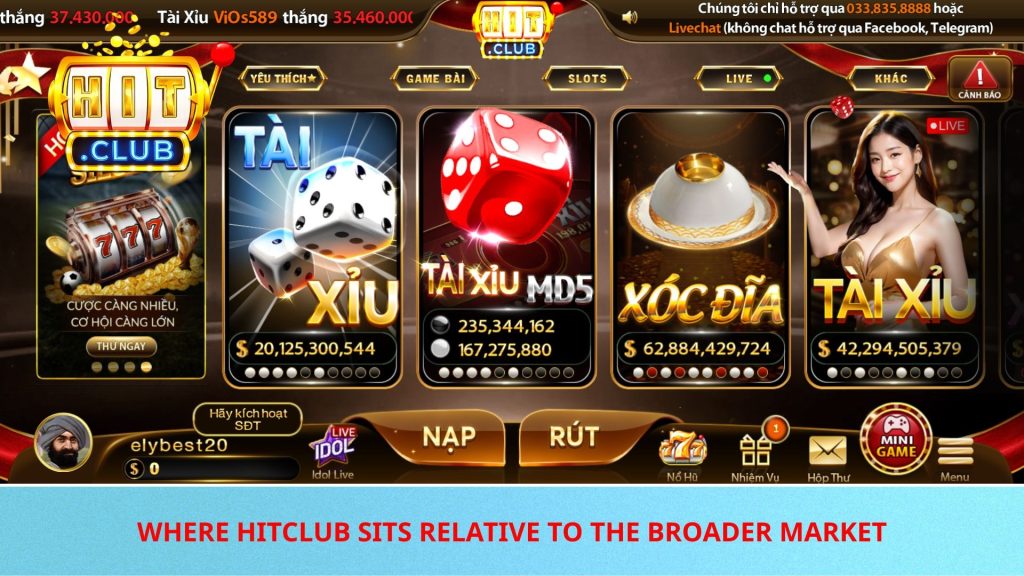
Within Vietnam specifically, Hitclub operates in a competitive market segment alongside portals that have been building user bases for varying periods. The market is not dominated by a single operator — multiple portals have developed loyal followings by serving the same core preferences effectively.
Hitclub’s position within this domestic market reflects its reliability-centered identity: it serves the segment of players who prioritize consistent experience over spectacular promotional offers. This is a durable market position because the players in this segment — experienced enough to value reliability over novelty — represent a more stable user base than players driven primarily by promotional generosity.
Within the Regional Online Gaming Ecosystem
Zooming out to the Southeast Asian regional level, Hitclub is a Vietnamese market portal operating within a regional ecosystem that includes significantly larger operators based in other markets. The competitive landscape at the regional level is more complex — there are operators with resources substantially larger than any single-market Vietnamese portal.
What Hitclub has that regional mega-operators often lack is cultural specificity. The card game section built around Vietnamese titles, the promotional communication style calibrated for Vietnamese player expectations, and the community presence in Vietnamese gaming channels are assets that regional operators can’t replicate simply by entering the market with scale. Cultural specificity is a form of competitive advantage that favors the portal built within the culture over the operator entering it from outside.
Within the Global Trend Toward Mobile Gaming
At the broadest level, Hitclub’s development mirrors a global trend: the migration of gaming activity from dedicated gaming hardware and desktop computers toward mobile devices. This global pattern has accelerated in markets like Vietnam where desktop access was never the dominant access model, and where mobile gaming has grown from early smartphone adoption directly into sophisticated portal experiences without a significant desktop intermediate phase.
Hitclub’s position within this global trend is one of alignment rather than adaptation — the portal was built mobile-first because its market is mobile-first, which means it’s moving in the same direction as the broader global industry without having to catch up to a mobile reality that arrived later than expected.
What the Landscape Context Means for Players
Understanding where Hitclub sits in the broader online gaming landscape has practical implications for players evaluating their options.
A portal with cultural specificity — one built for Vietnamese card game culture, Vietnamese mobile access patterns, and Vietnamese player expectations about transparency and reliability — is likely to deliver a more resonant experience for Vietnamese players than a regional or global operator that has adapted a more generalized product for the local market.
The competitive advantages that Hitclub has developed — card game depth, mobile reliability, community trust — are more defensible within the regional landscape than scale advantages alone, because they’re grounded in the specific characteristics of the market rather than in resources that larger operators could replicate.
Conclusion
Hitclub’s place in the broader online gaming landscape is that of a culturally specific, reliability-oriented reward gaming portal operating in a regional market defined by mobile-first access, strong card game tradition, and growing appetite for live dealer experiences. Within Vietnam, it occupies a distinct position built on consistency rather than scale. Within Southeast Asia, its cultural specificity is an advantage over regional operators lacking local depth. And within the global trend toward mobile gaming, it’s aligned rather than adapting. Understanding this broader context helps explain why Hitclub looks the way it does — and why its product choices, which might appear conservative from outside the regional market, are well-calibrated for the environment in which the portal actually operates.